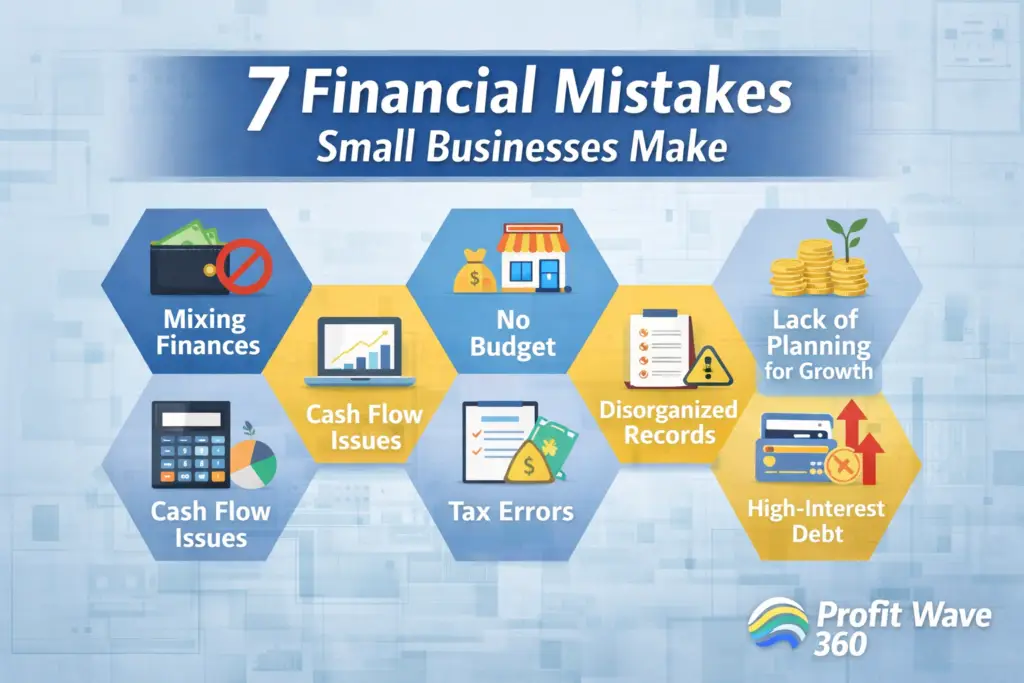
Starting and running a small business is exciting, but it also comes with financial, operational, and strategic challenges. Many entrepreneurs make avoidable mistakes that can slow growth, hurt profitability, and even lead to business failure.
Understanding these common small business mistakes can help you make smarter decisions, protect your finances, and build a more successful company.
In this guide, we’ll cover the biggest mistakes small business owners make and how you can avoid them.

1. Mixing Personal and Business Finances
One of the biggest financial mistakes small business owners make is combining personal and business expenses. Using the same bank account or credit card for everything creates accounting confusion and makes tax filing difficult.
Why This Is a Problem
- Difficult bookkeeping
- Inaccurate financial reports
- Increased audit risk
- Missed tax deductions
- Poor cash flow visibility
How to Avoid It
- Open a separate business bank account
- Use dedicated business credit cards
- Track all expenses properly
- Maintain organized records
Separating finances helps you understand your business performance clearly and simplifies tax preparation.
2. Ignoring Bookkeeping
Many small business owners delay bookkeeping until tax season. Unfortunately, waiting too long often leads to missing receipts, inaccurate records, and costly financial errors.
Benefits of Proper Bookkeeping
- Better financial visibility
- Easier tax filing
- Improved cash flow management
- Accurate reporting
- Smarter business decisions
Consistent bookkeeping is essential for long-term business success.
3. Poor Cash Flow Management
Cash flow problems are one of the leading reasons small businesses fail. Even profitable businesses can struggle if money is not managed properly.
Common Cash Flow Mistakes
- Overspending
- Late invoicing
- Ignoring unpaid invoices
- No emergency savings
- Poor budgeting
How to Improve Cash Flow
- Send invoices quickly
- Follow up on overdue payments
- Monitor expenses carefully
- Create monthly cash flow forecasts
- Maintain a financial reserve
Managing cash flow effectively helps businesses stay stable during slow seasons.
4. Not Understanding Tax Responsibilities
Taxes can quickly become overwhelming for business owners who are unfamiliar with filing requirements and deadlines.
Common Small Business Tax Mistakes
- Filing taxes late
- Missing quarterly tax payments
- Poor expense tracking
- Incorrect deductions
- Misclassifying employees or contractors
Working with tax professionals can reduce errors and help maximize deductions legally.
5. Trying to Do Everything Alone
Many entrepreneurs attempt to handle accounting, payroll, marketing, operations, and customer service without help. While this may save money initially, it often leads to burnout and mistakes.
Why Delegation Matters
Outsourcing important tasks allows business owners to:
- Save time
- Improve efficiency
- Reduce errors
- Focus on business growth
Hiring professionals for bookkeeping and tax services can significantly improve business operations.
6. Underpricing Products or Services
Setting prices too low is a common mistake among small businesses trying to compete in crowded markets.
Risks of Underpricing
- Reduced profit margins
- Difficulty scaling
- Lower perceived value
- Financial instability
Smart Pricing Strategies
When setting prices, consider:
- Operating expenses
- Taxes
- Labor costs
- Industry standards
- Profit goals
Profitable pricing supports sustainable business growth.
7. Neglecting Marketing
Some businesses rely entirely on referrals and fail to invest in marketing. Without consistent promotion, attracting new customers becomes difficult.
Effective Marketing Strategies for Small Businesses
- Search engine optimization (SEO)
- Social media marketing
- Email marketing
- Content marketing
- Online reviews
A strong online presence helps businesses increase visibility and build customer trust.
8. Failing to Track Financial Performance
Many business owners do not review financial reports regularly. Without proper tracking, it becomes difficult to identify problems or opportunities.
Important Financial Reports
- Profit and loss statements
- Cash flow reports
- Balance sheets
- Expense reports
- Revenue trends
Regular financial analysis helps business owners make informed decisions.
9. Operating Without a Business Plan
Running a business without clear goals or financial planning can create confusion and instability.
A Strong Business Plan Should Include
- Revenue goals
- Marketing strategies
- Financial forecasts
- Budget planning
- Growth objectives
Planning improves decision-making and helps businesses stay focused.
10. Avoiding Professional Financial Help
Many small business owners wait until financial problems become serious before seeking professional support.
Professional accountants and bookkeeping experts can help businesses:
- Stay compliant
- Reduce tax errors
- Improve cash flow
- Maintain accurate records
- Save time and money
Getting expert help early can prevent costly mistakes later.
Final Thoughts
Every entrepreneur makes mistakes, but recognizing them early can help protect your business and support long-term growth. Proper bookkeeping, tax planning, financial management, and professional support are essential for running a successful business.
If you want to avoid common small business mistakes and improve your financial management, ProfitWave360 offers expert bookkeeping, payroll, tax preparation, and financial support services designed to help businesses grow with confidence.
Frequently Asked Questions
What is the biggest mistake small business owners make?
One of the most common mistakes is poor financial management, especially mixing personal and business finances and ignoring bookkeeping.
Why do small businesses struggle with cash flow?
Many businesses fail to monitor expenses, follow up on invoices, or maintain emergency savings, leading to cash shortages.
How can small businesses avoid tax mistakes?
Keeping accurate records, paying taxes on time, and working with tax professionals can help businesses stay compliant.
Why is bookkeeping important for small businesses?
Bookkeeping provides accurate financial records, improves cash flow management, and simplifies tax filing.