
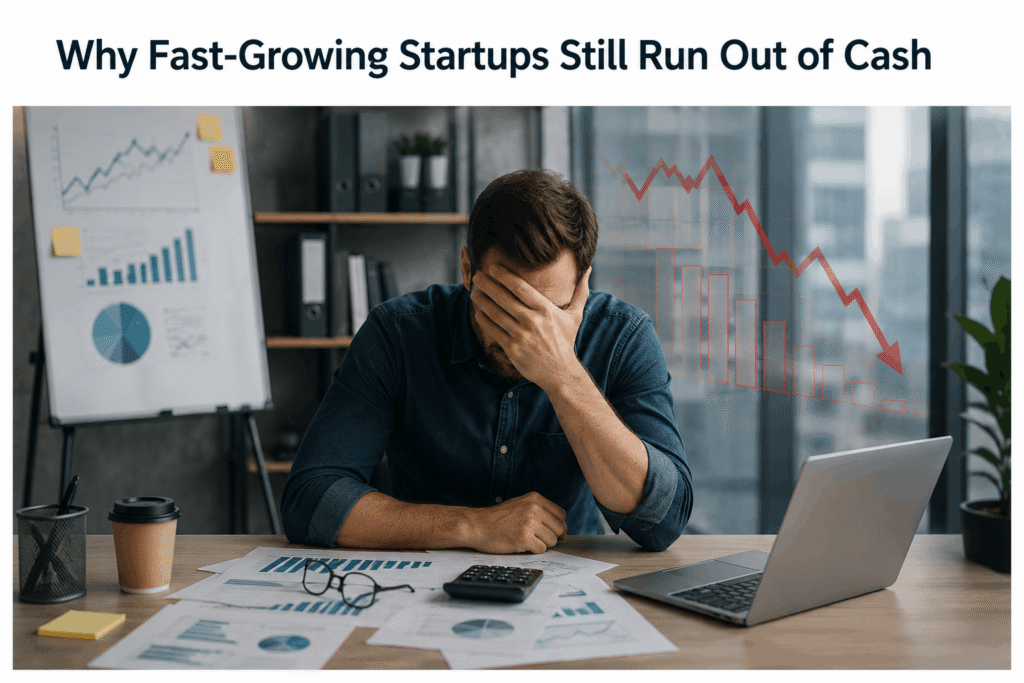
Growth is often seen as the ultimate sign of startup success. More customers, higher revenue, and expanding operations usually indicate that a company is moving in the right direction. Yet many startups that appear successful from the outside still face a serious problem: running out of cash.
Revenue growth and cash flow are not the same thing. A startup can be gaining customers rapidly while struggling to pay employees, vendors, and operating expenses. Understanding the difference is critical for founders who want to build sustainable businesses.
Growth Doesn’t Always Mean Liquidity
One of the most common misconceptions among founders is that increasing sales automatically improves financial stability. In reality, rapid growth often requires significant upfront spending.
Businesses may need to hire new employees, invest in technology, expand marketing campaigns, purchase inventory, or lease larger office space before the additional revenue arrives. If expenses grow faster than available cash, the company can experience a cash shortage despite strong sales performance.
Delayed Customer Payments
Many startups operate with payment terms that allow customers to pay invoices 30, 60, or even 90 days after services are delivered. While revenue may be recorded immediately, the actual cash is not received until much later.
As the company grows, outstanding invoices can increase significantly. This creates a gap between reported revenue and available cash, making it difficult to cover daily operating expenses.
Hiring Too Quickly
Growth often encourages founders to expand their teams rapidly. While additional staff can support scaling efforts, aggressive hiring increases payroll obligations, benefits costs, and operational overhead.
If revenue projections fail to meet expectations, the company may find itself carrying expenses that exceed its cash-generating capacity. Payroll is one of the largest recurring costs for many startups, making workforce planning essential.
Overspending on Customer Acquisition
Acquiring customers requires investment, but some startups spend heavily on marketing without closely tracking returns. Paid advertising, sponsorships, content production, and sales team expansion can quickly consume available cash.
When customer acquisition costs rise faster than customer lifetime value, growth becomes expensive rather than profitable. Sustainable growth requires balancing acquisition spending with realistic revenue expectations.
Poor Cash Flow Forecasting
Many founders focus heavily on revenue targets while paying less attention to cash flow forecasting. Without accurate projections, it becomes difficult to identify upcoming cash shortages before they become critical.
A proper cash flow forecast should account for expected income, recurring expenses, tax obligations, payroll, debt payments, and potential unexpected costs. Regular forecasting helps founders make informed decisions and avoid financial surprises.
Inventory and Operational Costs
Product-based startups often face additional cash challenges. Growing demand usually requires purchasing more inventory before sales are completed. Manufacturing, shipping, storage, and fulfillment costs can consume substantial amounts of cash.
Even when products sell successfully, the company may have already spent significant capital to support growth, creating temporary cash constraints.
Overestimating Future Revenue
Optimistic forecasts can lead founders to make financial commitments based on expected future sales. When growth slows or market conditions change, projected revenue may not materialize.
This mismatch between expectations and reality can leave startups with expenses they cannot easily reduce, placing pressure on cash reserves.
Lack of Emergency Reserves
Unexpected events can impact any business. Economic downturns, customer churn, delayed payments, supply chain disruptions, or increased competition can all affect cash flow.
Startups that operate without a financial cushion often struggle to absorb these shocks. Maintaining adequate cash reserves provides flexibility and reduces the risk of sudden financial distress.
How Founders Can Protect Cash Flow
To reduce the risk of running out of cash, founders should:
- Monitor cash flow weekly, not just monthly.
- Build detailed cash flow forecasts.
- Track customer acquisition costs carefully.
- Improve invoice collection processes.
- Control hiring and operational spending.
- Maintain emergency cash reserves.
- Review financial performance regularly.
- Plan for slower-than-expected growth scenarios.
Final Thoughts
Many startups fail not because they lack customers or revenue, but because they run out of cash. Rapid growth can create significant financial pressure when spending, hiring, and operational demands outpace available liquidity.
Successful founders understand that growth must be supported by strong cash flow management. By forecasting accurately, controlling expenses, and maintaining financial discipline, startups can scale sustainably and avoid the cash shortages that derail promising businesses.