Running a small business comes with many financial responsibilities, and taxes are often one of the largest expenses business owners face each year. The good news is that with proper planning and a clear understanding of available deductions, you can legally reduce your tax burden while keeping more money in your business.
In this guide, we’ll cover practical small business tax tips that can help reduce expenses, improve cash flow, and maximize your savings.
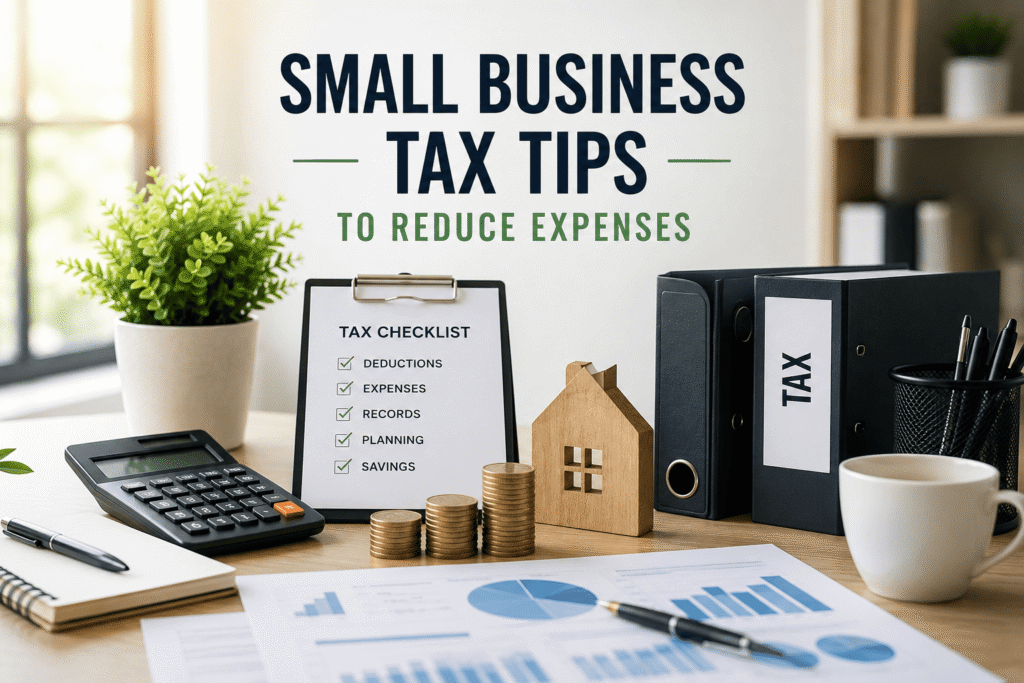
1. Keep Accurate Financial Records
One of the most effective ways to reduce taxes is to maintain organized financial records throughout the year. Proper bookkeeping helps you track deductible expenses, identify tax-saving opportunities, and avoid costly mistakes during tax season.
Important records to maintain include:
- Business income and sales records
- Expense receipts and invoices
- Payroll records
- Bank and credit card statements
- Vehicle mileage logs
- Home office expenses
Accurate records ensure you never miss valuable deductions.
2. Separate Business and Personal Expenses
Mixing personal and business finances can create confusion and increase the risk of errors during tax filing. Open a dedicated business bank account and use a separate credit card for business transactions.
This makes it easier to:
- Track deductible expenses
- Simplify bookkeeping
- Prepare tax returns
- Support deductions during an audit
3. Take Advantage of Home Office Deductions
If you operate your business from home, you may qualify for a home office deduction. The space must be used regularly and exclusively for business purposes.
Potential deductible expenses include:
- Rent or mortgage interest
- Utilities
- Internet service
- Property taxes
- Home insurance
This deduction can significantly reduce taxable income for many small business owners.
4. Deduct Business Vehicle Expenses
If you use a vehicle for business purposes, you may be able to deduct related costs.
Common deductible vehicle expenses include:
- Mileage
- Fuel
- Maintenance and repairs
- Insurance
- Registration fees
Keeping a detailed mileage log is essential to support your claim.
5. Maximize Equipment and Technology Deductions
Many business-related purchases can be deducted, including:
- Computers and laptops
- Printers
- Software subscriptions
- Office furniture
- Business phones
- Industry-specific equipment
Certain assets may qualify for immediate deductions or accelerated depreciation, helping reduce taxable income.
6. Claim Marketing and Advertising Expenses
Promoting your business is essential for growth, and many marketing expenses are fully deductible.
Examples include:
- Website design and maintenance
- SEO services
- Social media advertising
- Google Ads campaigns
- Business cards
- Email marketing software
Investing in growth can also provide valuable tax savings.
7. Deduct Professional Services
Fees paid to professionals for business purposes are generally tax-deductible.
These may include:
- Accountants
- Tax professionals
- Bookkeepers
- Lawyers
- Business consultants
Professional guidance not only improves operations but can also help uncover additional tax-saving opportunities.
8. Contribute to Retirement Plans
Retirement contributions can reduce your current taxable income while helping secure your financial future.
Options for small business owners may include:
- SEP IRA
- SIMPLE IRA
- Solo 401(k)
These plans often offer substantial contribution limits and valuable tax benefits.
9. Track Business Travel Expenses
Travel expenses incurred for legitimate business purposes may qualify for deductions.
Potential deductions include:
- Airfare
- Hotels
- Rental cars
- Meals during business travel
- Conference registration fees
Always retain receipts and document the business purpose of each trip.
10. Plan for Quarterly Estimated Taxes
Many small business owners are required to make quarterly estimated tax payments. Failing to do so can result in penalties and interest charges.
Benefits of quarterly tax planning include:
- Improved cash flow management
- Reduced tax surprises
- Avoidance of IRS penalties
- Better year-round financial planning
Regular tax reviews help ensure you’re paying the correct amount throughout the year.
11. Review Available Tax Credits
Tax credits directly reduce the amount of tax owed and can provide significant savings.
Depending on your business, you may qualify for credits related to:
- Hiring employees
- Research and development
- Energy-efficient improvements
- Employee benefits
Because credits can change from year to year, it’s important to review available opportunities annually.
12. Work with a Tax Professional
Tax laws are constantly changing, and every business has unique circumstances. A qualified tax professional can help identify deductions, ensure compliance, and develop strategies to legally reduce your tax liability.
The cost of professional tax planning is often far less than the potential savings it can generate.
Final Thoughts
Reducing business expenses through smart tax planning is one of the most effective ways to improve profitability. By maintaining accurate records, maximizing deductions, utilizing available credits, and planning throughout the year, small business owners can keep more of their hard-earned revenue.
The key is to be proactive rather than waiting until tax season arrives. With the right tax strategy, your business can reduce expenses, improve cash flow, and position itself for long-term success.